
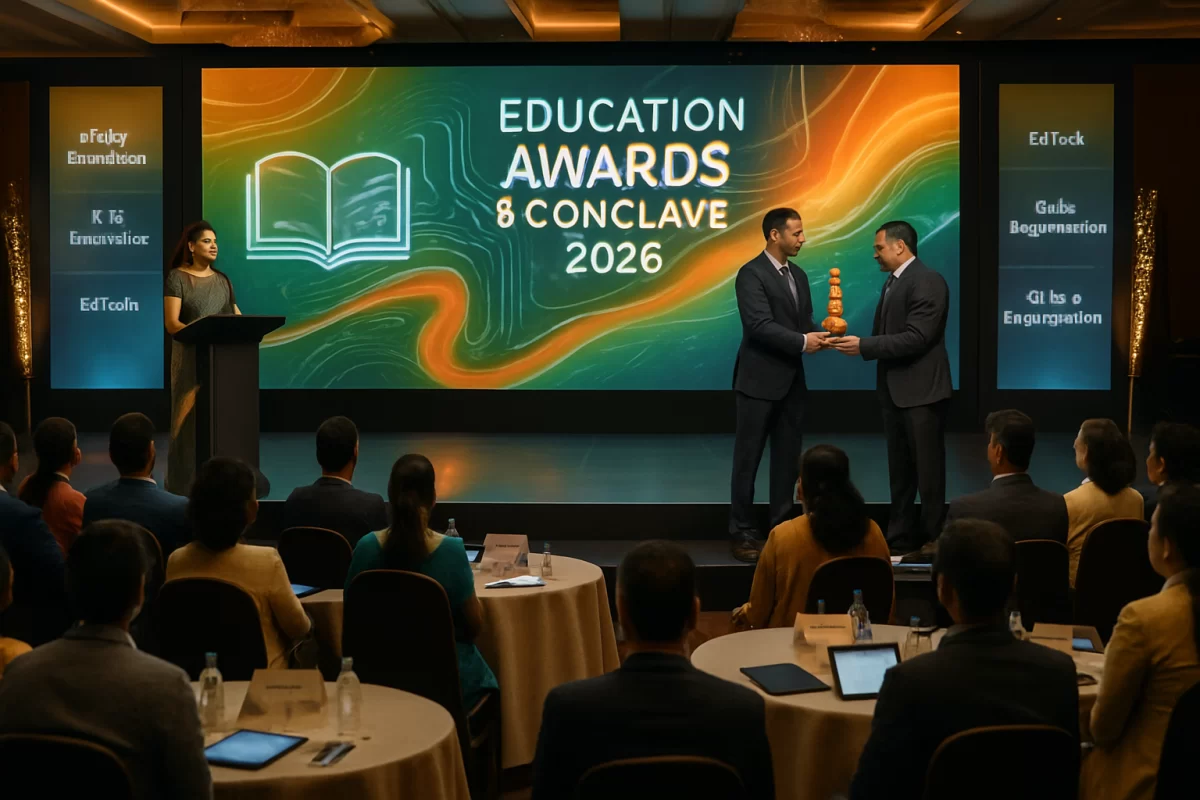
If you want 2026 to be a breakout year for your institution, there is no faster way to gain momentum than by showing up at the right stages. From policy roundtables to glittering ceremonies, education conclave and awards events in India in 2026 will shape partnerships, spotlight innovation, and set priorities for the next decade. The best part: with smart planning, even a lean team can turn a few well-chosen conferences into measurable enrollment, funding, and brand wins.
Think of the season as a curated marketplace of ideas and influence. You will meet regulators, school leaders, university VCs, edtech founders, CSR heads, and investors—often in the same ballroom. Arrive with clarity, leave with allies and next steps.
Below is your practical guide to the most impactful gatherings, plus strategies to secure stage time, convert conversations, and take home trophies.
Why 2026 Is a Landmark Year for Indian Education Events
Policy milestones, technology adoption, and talent pipelines all converge in 2026. Institutions are translating the National Education Policy (NEP) into measurable outcomes, while AI, skilling, and outcome-based curricula move from pilots to practice.
Meanwhile, new UGC and accreditation frameworks continue to evolve, and industry-aligned micro-credentials are mainstream. In this context, India’s leading academic summits and awards nights become decision centers, not just discussion forums.
How to Choose the Right Education Awards and Conferences for Your Goals
Start by defining a single primary objective: thought leadership, admissions growth, partnerships, investment, or employer linkages. With that anchor, shortlist events where your stakeholders reliably attend and where agendas match your narrative.
Scan past speaker rosters, award categories, and exhibitor lists. If your buyers, regulators, or peers do not show up, redirect your budget. A smaller, specialized conclave can outperform a mega-show if it matches your ICP.
Best Education Conclaves and Awards in India 2026: The Definitive List
FICCI Higher Education Summit & Excellence Awards 2026
Expect a policy-forward program that brings together university leadership, government, and industry. Past editions have highlighted internationalization, research funding, quality benchmarks, and employability.
Who should attend
Vice-chancellors, deans, accreditation leaders, international relations teams, and higher-ed edtech providers. Institutions aiming for visibility with policymakers will benefit most.
How to stand out for awards
Show evidence of impact: graduate outcomes, research translation, rural outreach, and global collaborations. Back claims with audited data and third-party validations.
DIDAC India Expo, Conferences & IDA Awards 2026
India’s largest education and skilling showcase brings classroom technologies, lab solutions, and campus infrastructure under one roof. The parallel forums spotlight pedagogy, teacher development, and institutional transformation.
Who should attend
K-12 and higher-ed decision-makers, procurement leads, edtech founders, and training providers. If you sell to schools or universities, this is prime territory.
How to stand out for awards
Demonstrate measurable learning gains, adoption at scale, and robust teacher enablement. Live demos with user stories beat feature checklists.
ASSOCHAM National Education Summit & Excellence Awards 2026
With a strong policy-industry interface, this platform emphasizes quality improvement, public-private collaboration, and employability. Panels often feature senior bureaucrats and corporate leaders.
Who should attend
Institutional promoters, placement heads, corporate L&D leaders, and policy teams. It’s ideal for forging industry partnerships and CSR-backed programs.
How to stand out for awards
Focus on outcome metrics such as job placements, apprenticeships, and community impact. Include case studies of co-designed curricula with employers.
EdTechReview Summit & Awards 2026
A concentrated forum for edtech founders, investors, and academic adopters, known for pragmatic sessions on product-market fit and evidence-led implementation. Expect practical workshops and startup showcases.
Who should attend
Early to growth-stage edtech startups, institutional innovation heads, and angel/VC networks. If you need pilots, this is fertile ground.
How to stand out for awards
Provide credible usage analytics, retention data, and third-party research. Show how pedagogy and product work together in real classrooms.
QS India Summit 2026
Focused on rankings, internationalization, and research excellence, this gathering attracts global partners and Indian HEIs aiming to scale reputation. Sessions typically examine metrics, mobility, and collaboration models.
Who should attend
International relations offices, research administrators, and branding teams. Those targeting foreign collaborations and joint degrees will find high-value conversations.
How to stand out for awards
Highlight research impact, citations, and meaningful international partnerships. Document sustained outcomes over one-off MoUs.
EducationWorld India School Rankings Awards 2026
A marquee ceremony for K-12 brand equity, drawing principals, school promoters, and category leaders from across India. Visibility at this platform can strengthen parent trust and talent attraction.
Who should attend
K-12 leaders seeking peer benchmarking and brand amplification. Vendors serving premium schools also gain targeted access.
How to stand out for awards
Emphasize holistic education, safety, teacher development, and co-curricular achievements. Quantify improvements year over year.
BW Education Leadership Summit & Awards 2026
At the intersection of policy, leadership, and innovation, this forum recognizes bold initiatives across K-12, higher ed, and skilling. Media amplification adds post-event momentum.
Who should attend
Institutional CXOs, marketing heads, and entrepreneurship cells. It’s a strong platform for thought leadership and brand storytelling.
How to stand out for awards
Submit crisp narratives with verifiable KPIs, student success journeys, and fiscal prudence. Tie innovation to outcomes, not just novelty.
CII Education Summit & Conclaves 2026
Industry-linked sessions on employability, apprenticeships, and future skills make this a bridge between campuses and companies. You’ll find actionable models for work-integrated learning.
Who should attend
Placement directors, corporate partnerships teams, and skilling providers. Ideal for building pipelines into industry.
How to stand out for awards
Show sustained employer engagement, not sporadic drives. Map curriculum to job roles and share hiring partner testimonials.
NISA School Leaders Summit & Forums 2026
Representing independent schools, NISA’s programs spotlight regulatory clarity, teacher capacity, and low-cost innovation. Expect pragmatic sessions tailored to private school realities.
Who should attend
School owners, principals, school business managers, and solution providers for budget-sensitive contexts. The networking is highly focused.
How to stand out for recognition
Emphasize affordability with quality: fee transparency, community engagement, and frugal innovation that scales.
Times Education Icons / Education Excellence Awards 2026
City-focused showcases that boost public visibility for schools, colleges, and training institutes. Strong media coverage can translate to inquiries and partnerships.
Who should attend
Institutions aiming for local-market credibility and parent mindshare. Regional education brands can rise quickly here.
How to stand out for awards
Back reputation with credible parent feedback, alumni outcomes, and audit trails. Align submissions to consumer trust factors.
What to Expect: Formats, Tracks, and Decision Rooms
Beyond plenaries, the real action happens in workshops, roundtables, and hosted buyer meetings. These are smaller rooms where deals move forward.
Additionally, many award nights are paired with daytime forums. Plan to attend both so your messaging is consistent across stages and meetings.
A Smart Playbook to Win Education Awards in 2026
Start early with a data room: learning outcomes, placement rates, accreditation status, faculty credentials, and community impact. Curate proof, not prose.
Align your story to each category’s rubric. Judges look for clarity, evidence, scalability, and sustainability over flashy claims.
Invite third-party voices into your submission: partner letters, external evaluations, alumni success stories, and press coverage. External credibility multiplies trust.
Finally, rehearse a two-minute “elevator defense” of your application. If you cannot say it simply, you probably cannot win it.
Exhibiting and Speaking: Converting Visibility into Outcomes
For exhibitors, design your booth for conversations, not clutter. Lead with one-line value, one flagship demo, and one clear CTA.
For speakers, write a thesis-driven talk backed by case evidence. Offer a template, checklist, or framework that attendees can implement in a week.
Afterwards, follow up within 48 hours with a resource pack and a short call link. Momentum decays fast; move first.
High-Return Networking at Indian Education Conclaves
Pre-book meetings through event apps and LinkedIn. A targeted list of 20 people beats 200 random handshakes.
Host a small breakfast or roundtable to gather stakeholders around a problem you solve. Facilitating value earns durable goodwill.
During sessions, ask tactical questions and share a concise insight. People remember clarity and generosity more than a sales pitch.
Budgeting, Travel, and Team Resourcing for 2026
Block a realistic calendar: two flagship summits, one city awards night, and one specialized forum. Depth outperforms breadth.
Secure early-bird passes, negotiate multi-event bundles, and co-sponsor with partners to stretch budgets. Track ROI by deals initiated, pilots launched, media mentions, and applications influenced.
Assign roles: one spokesperson, one relationship lead, and one scribe. A crisp debrief post-event turns notes into next actions.
Quarter-by-Quarter Planning Timeline for Event Season
Q1: Research and Readiness
Audit your data, finalize narratives, and shortlist events aligned to goals. Draft award submissions and speaker abstracts early.
Outreach to organizers for speaking slots and hosted buyer programs. Lock travel and budgets before prices rise.
Q2: Early Engagement and Pilots
Attend at least one forum to validate messaging and book pilot conversations. Publish a case study or white paper you can reference on stage.
Capture testimonials from early adopters to strengthen award entries. Iterate your deck based on questions you hear repeatedly.
Q3: Peak Season and Media
Prioritize the largest conclave for maximum partner density and policy access. Align a product update or program launch to the event news cycle.
Book media briefings and share data-led insights. Leverage awards shortlists to drive social proof.
Q4: Awards Nights and Closers
Focus on relationship consolidation and MoUs. Convert warm conversations into signed pilots and co-branded projects.
Plan a “state of the year” webinar showcasing outcomes. Recognition plus results equals next year’s momentum.
FAQs About Education Conclaves and Awards in India 2026
How far in advance should I apply for awards?
Most applications open 8–12 weeks before the ceremony. Prepare your data and narratives in Q1 so you can submit early and refine if needed.
What makes a strong speaker proposal?
A crisp problem statement, a tested solution, and measurable outcomes. Add one actionable worksheet attendees can use immediately.
Is a big expo better than a niche summit?
It depends on your ICP. Large expos offer reach; niche summits offer precision. Choose based on who you must meet this quarter.
How do I measure event ROI?
Track pipeline created, cost per qualified meeting, pilots launched, PR impressions, and enrollment or adoption influenced. Review within 10 days while details are fresh.
Actionable Checklist You Can Use This Week
Define one primary outcome for 2026 events and pick three aligned platforms from this list. Assemble a proof-first data room, draft two award entries, and outline a 12-minute talk backed by case evidence.
Then pre-book 15 meetings, prepare a one-page offer, and set a 48-hour follow-up workflow. Show up with focus, document outcomes, and turn stage time into sustained impact for your learners and community.